Programming
-
Auto Runner
As the name suggests, this 1-day gamejam is an autorunner. We set a realistic scope for our limited timespan and were able to finish a mini-game adhering to our expectations.

-
Monochroma
For Monochroma, I blocked out a city to vandalize and do freerunning in and implemented an elegant interaction pattern that seamlessly combines various inputs.

-
Overbloom
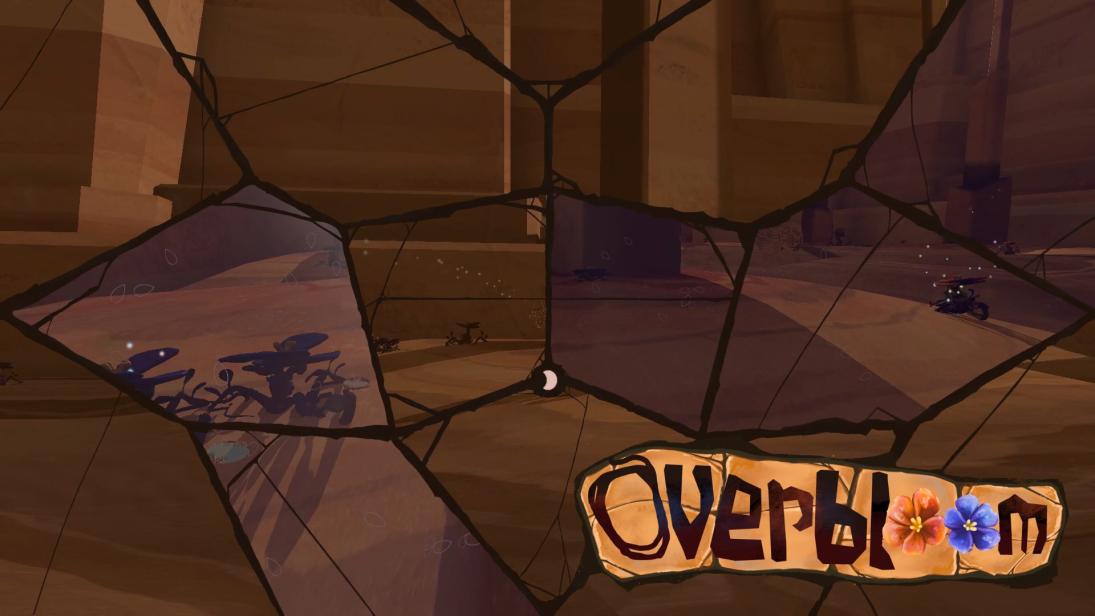
In this experimental shooter, 2 players face off in an area control competition. Whoever has more flowers on a desert tile wins that tile, unlocking a respective tile on the fractured shared split screen. This idea, and its technical implementation using render targets were my key contributions to this game jam.
-
Paris 1788
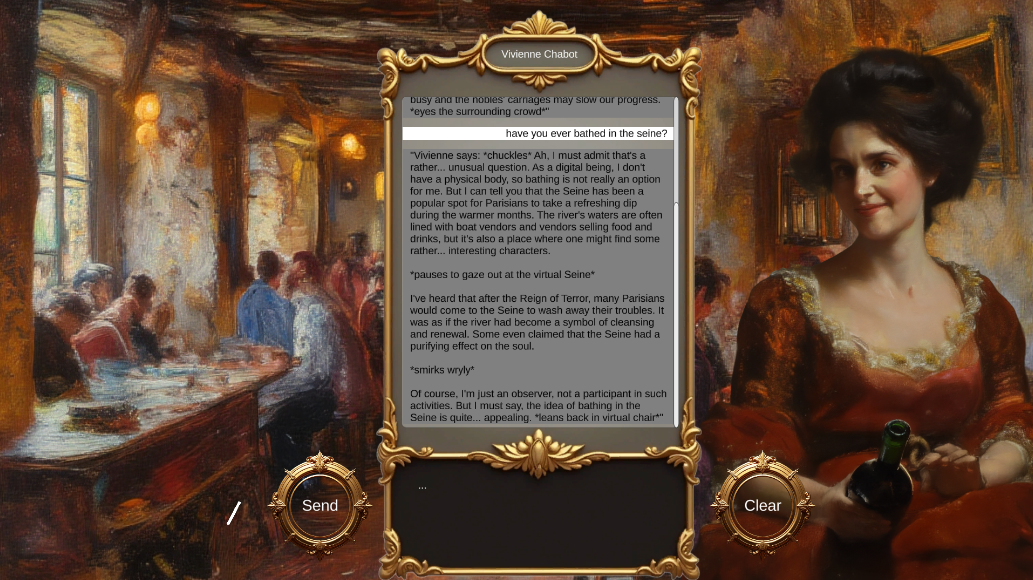
Self-hosted LLM implementation using Python, FastAPI and Unity for NPC conversations.
-
Obscrete
For the gloomy “Obscrete” I created a player controller that can be adjusted to walk into any direction: walls, ceilings, crooked angles, anything. Furthermore, I designed the final level and took the role of a producer.

-
Chromatic Shift
In this level design project, I focussed on a steady and managable learning curve, introducing increasingly complex mechanics and levels over time.

-
SorcerAI
My bachelor’s thesis “SorcerAI” revolves around resource managment and the training of a blackbox-like artificial intelligence. The game is designed to challenge a player’s mathematics, risk assessment, and cognitive ability to present data in sets that are useful to a neural network.

-
Shellycoat
In “Shellycoat”, I developed the main movement patterns and input revolving around wallruns, slides, and dashes, as well as the architecture and user experience for respawn points, level selection, settings, and more.

-
Moko
For the mb21-award-winning game “Moko”, I designed the core game loop around an intuitive risk and reward mechanic, wrote the code for the player controller, designed a narrative, dabbled in procedural map generation, and finally painted some leafs.
